
Camping with a Dog for the First Time: Sleep, Space and Campsite Rules
A first camping trip with your dog starts with a few practical decisions: what familiar bedding to bring, how to keep everyday routines recognisable, and how your booked campsite’s rules will affect the stay. Thinking through those details gives you a concrete packing and arrival plan.
Plan the first stay around your dog’s usual needs, the space available and the site’s rules. Familiar bedding and routines may help, but they do not guarantee that a dog will settle. For health or behaviour concerns, get appropriate veterinary or qualified behavioural advice before travelling.
In a nutshell
- Help your dog become familiar with the tent before the trip, and bring familiar bedding.
- Plan around regular food, play and sleep routines.
- Pack food, water, bowls, dog-waste bags and a dedicated towel alongside the bedding.
- Read your operator’s lead, building-access and waste rules; the examples below apply to the named operators.
- Plan appropriate supervision and confirm the site’s rules; do not assume a tent is a safe place to leave a dog alone.
1Start with familiar sleeping things
Let your dog become familiar with the tent before the trip, including the space where you plan to sleep together. Introduce it calmly and bring familiar bedding rather than making every part of the first night new.
Take the usual bed if practical, or pair a suitable travel bed with a familiar blanket. Check how it fits alongside your own sleep kit, keeping access and ventilation clear.
Decide which familiar bedding you will bring and allow space for it in your packing plan. Bedding alone cannot make every tent arrangement suitable for a dog; consider supervision, weather and your dog’s needs throughout the stay.
2Pack for the everyday routine
Keep feeding, exercise and sleep routines familiar where possible. Plan arrival and mealtimes around your dog’s normal day rather than adding an entirely new schedule to an unfamiliar place.
Its camping checklist supports these ordinary supplies:
| Bring | What the Club’s guidance says |
|---|---|
| Regular food | Take the food your dog normally eats. |
| Water | Keep water available while travelling, staying on site or exploring. |
| Food and water bowls | Include both in the packing list. |
| Dog-waste bags | Pack plenty and dispose of waste responsibly. |
| A dedicated towel | Bring towels for your dog. |
| Familiar bedding | Take the regular bed where possible, or a travel bed with a familiar blanket. |
This is a practical starting list, not a complete inventory for every dog or trip. Before leaving, you can group it into sleeping things, food and water supplies, and clean-up items. That grouping is simply a way to organise the supported checklist; it adds no special equipment requirement.
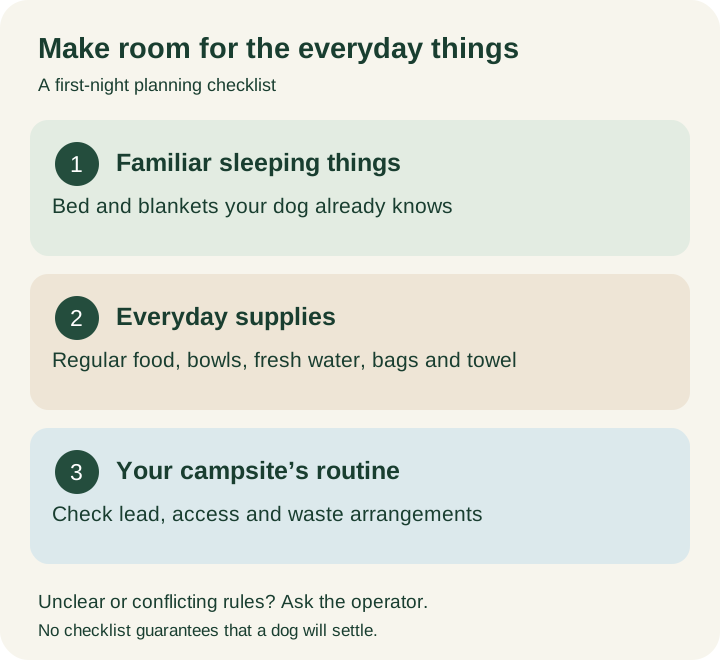
3Read the rules for your booked operator
Check the site’s lead rules, any length limit, exercise areas and arrangements for cleaning up. Confirm which buildings or shared areas ordinary pets may enter and what separate arrangements apply to assistance dogs.
Check whether lead rules continue to apply on dog walks and in exercise areas. Do not assume an area is off-lead simply because it is labelled dog-friendly.
Read signs and ask about restricted areas on arrival. Keep your dog’s needs and your own access requirements clear when booking, including any assistance-dog arrangements.
Before arrival, check the current rules for the place you have booked, including building access and waste arrangements. The useful result is knowing how that particular site operates.
4Clarify the unattended-dog question
Plan who will look after your dog while you use facilities or take part in activities. Do not assume that being inside a zipped tent makes an unattended dog safe or that the campsite permits it.
If the arrangements are unclear, confirm them before booking and plan appropriate supervision. A general statement about dog-friendly camping is not permission to leave your dog alone for a particular period.
Ask your booked operator to clarify its current arrangements before relying on either page. Clarification of site rules is not confirmation that unattended confinement is safe. Keep that unresolved issue separate from the preparations you can make now: familiar sleeping things, everyday supplies and a plan based on your dog’s normal routine.
Read next
How to Choose a Campsite You’ll Actually Enjoy
Compare campsite access, pitch size, facilities, rules, safety, accessibility, costs and booking terms—and know what to confirm before you pay.
Camping Activities in England: Ideas for Days, Evenings and Rainy Weather
Choose camping activities for daytime, evenings and wet spells, with options to adapt to your group and the conditions.
Join the conversation
What has worked for you? Share a useful tip, ask a question or tell us about your experience. Keep it friendly and leave out personal contact details.
Comments are reviewed before appearing. Your display name and comment will be public; your email address will not. How we handle your information.