Bikepacking or Cycle Touring? Choose the Camping Setup That Fits Your Ride
Your bike, a pile of camping kit and a route you want to ride: those are useful starting points. Deciding whether to call the trip bikepacking or cycle touring can wait. First, work out where the luggage could fit, what the equipment’s instructions allow, and how you will carry the shelter and sleep kit your trip needs.
The two terms overlap. Use this guide to compare carrying arrangements, check the fit on your actual bike and plan a short loaded rehearsal before the trip.
In a nutshell
Start with the route, essential kit and the carrying arrangements your bike can accommodate. Check mounting and load limits for the exact equipment. Keep weather-suitable shelter and sleep kit, repairs, first aid and navigation in the plan. A short loaded ride can reveal problems, but it does not certify compatibility or safety.
1Bikepacking, touring, and where the terms overlap
Bikepacking and cycle touring overlap. Bikepacking commonly emphasises lighter luggage and rougher routes, while touring can use a wide range of bikes, roads and luggage arrangements. The label matters less than whether your bike, load and skills suit the actual journey.
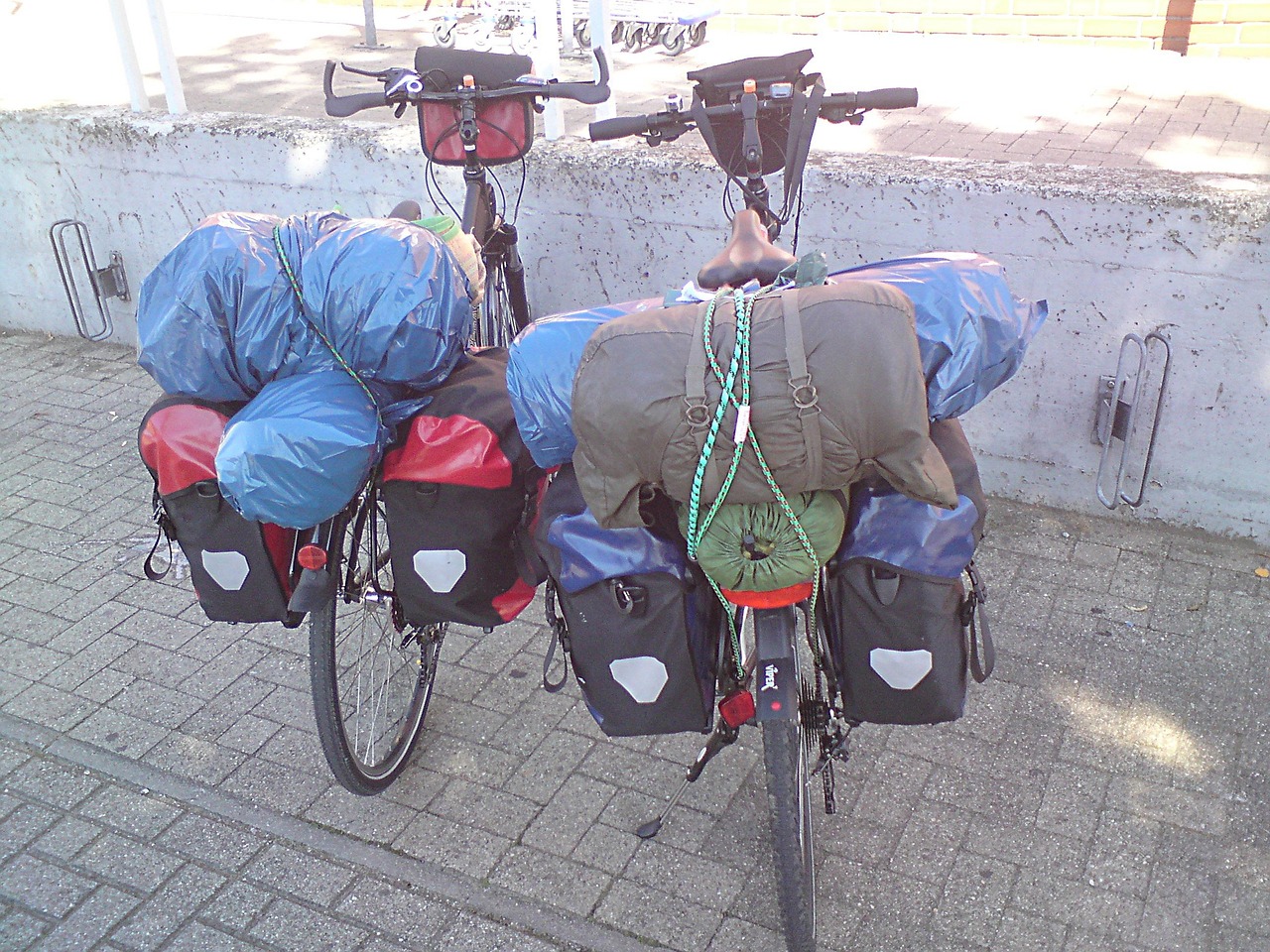
Self-supported camping rides can follow roads, gravel, trails or a mixture. Rack-mounted panniers provide one way to carry the load; frame, handlebar and seat packs provide another. Choose around the terrain and equipment rather than trying to make the trip fit a label.
Treat those descriptions as tendencies, not a rule that every off-road trip needs soft bags or every road trip needs panniers.
2Matching luggage style to your bike and your trip
Once you stop worrying about which camp you belong to, the real question becomes refreshingly practical: what do you need to carry, and where can your bike actually carry it?
A bikepacking arrangement may combine a seat pack, handlebar bag, frame bag and smaller pouches. Treat that as a range of options, not a mandatory shopping list. Fit and capacity need checking on your bike.
A rack-and-pannier arrangement is another option to assess. Put the kit you need beside the bike and ask: where could it be carried, what mounting provision is available, and what do the equipment instructions permit? Keep your intended route in view while you answer those questions.
Cycling UK warns that heavy seat and handlebar packs impose bending loads on the parts supporting them. This is a reason to check the bike and equipment guidance for your proposed load; it does not establish a safe load that transfers from one bike or bag to another (Cycling UK).
If you do go the rack-and-pannier route, Cycling UK is equally clear that the rack itself needs to be rigid enough to carry its load without flexing, and that rear panniers need to sit far enough back that your heels don’t catch them on every pedal stroke. Both of these are checks against your actual bike, your actual rack and your actual stride — not assumptions you can make from a product photo (Cycling UK).
3Checking real compatibility before you commit
Before buying a bag, check the actual fit and mounting conditions. A product photograph is not evidence that it will work on your bike.
Use the fitting information or a correctly scaled template for the exact frame bag. Check space within the frame, bottle access, straps and clearance from moving parts before buying.
Check whether contact points need protection and whether the bag and fastening method are permitted on your frame material. Do not transfer instructions for one product to a different bag or bike.
Make your fit check specific: use the bag’s fitting information, check the mounting instructions and load limits for each item, and check heel clearance with rear panniers. Adventure Cycling also warns that poor harness design or packing can cause tyre rub or abrasion (Adventure Cycling Association). Do not treat a bag’s stated limit as proof of what your bike or rack can carry. If the instructions do not resolve a compatibility question, seek the relevant manufacturer’s guidance before proceeding.
4Building a camping setup that actually works overnight
Once the luggage question is settled, or at least narrowed down, the next job is making sure what goes inside it will actually keep you fed, dry and rested. This is not the place to start trimming kit purely because it doesn’t suit your chosen bag system — a frame-bag setup that leaves out a proper sleeping arrangement because there wasn’t room isn’t a lighter kit, it’s an incomplete one.
Choose shelter and sleep kit for the expected conditions before deciding how to pack it. A compact tent can provide privacy and weather protection, but its packed size still needs to fit the load your bike can carry.
Match your sleeping bag and mat to the weather and ground conditions you expect, rather than the warmer night you hope to get.
Check how waterproof your luggage actually is. Protect sleeping kit, spare dry clothing and electronics inside suitable waterproof bags where needed, including when the outer bag has limited weather protection.
In its first-trip guidance, Cycling UK includes weather-suitable clothing, shelter and sleep kit, cooking gear, repairs, first aid and navigation among the considerations. Adapt the packing list to your route and trip, while retaining the essential functions. If the required kit will not fit, reconsider the carrying arrangement or trip plan rather than quietly dropping an essential.
5The loaded rehearsal: your reality check, not your safety certificate
So you’ve worked out your route, matched your luggage to your bike, checked the manufacturer’s fit and load guidance, and packed a shelter and sleep system suited to the forecast. The temptation now is to call it done and head straight out on the big trip. Don’t.
Take a short ride with the complete load before the main trip. Check handling, heel clearance, straps and any rubbing, then stop and recheck the arrangement. Resolve problems before increasing the distance or remoteness.
A rehearsal does not establish that a load complies with the manufacturer’s limits or that the equipment is compatible. Make those checks separately. If a problem appears, address it against the relevant instructions before the trip; do not assume it will sort itself out on the road.
6A short pre-ride checklist
Before you commit to a route and a departure date, it’s worth running through a short list of checks:
- Have you matched your luggage style (frame/seat/handlebar bags, rack-and-panniers, or a mix) to your actual route surfaces and the volume of gear you need to carry, rather than to a label?
- Have you checked your own frame triangle, heel clearance, tyre clearance and rack tube diameter against the specific product’s fit and mounting information, rather than assuming compatibility?
- Have you read the manufacturer’s load limits and mounting conditions for the exact bag or rack you’re using, bearing in mind these figures don’t transfer to other products?
- Have you chosen shelter and sleeping kit suited to the weather you actually expect, not the weather you’re hoping for?
- Have you packed dry bags or equivalent protection for clothing, sleeping kit and electronics if your main luggage isn’t fully waterproof?
- Have you kept your repair kit, navigation tools and basic first-aid provisions in the load, regardless of how minimal the rest of your packing is?
- Have you done a shorter loaded ride to check handling, rubbing and fit, understanding that this is a diagnostic step and not a guarantee of safety or compatibility?
The useful outcome is a setup you have checked against your actual bike, equipment instructions and trip plan. The label can follow. Keep any unresolved fit or loading question on the list until it is answered.
Read next
Camping Lights Explained: Lumens, Runtime and Not Blinding Your Neighbours
Choose a camping light by task, understand lumens and runtime, and keep unnecessary light out of neighbouring pitches.
Camping After Work: Can One Night Fit Your Plans?
Check whether a one-night campsite stay fits between leaving work and the next day’s commitments, using your own timings and the site’s rules.
Join the conversation
What has worked for you? Share a useful tip, ask a question or tell us about your experience. Keep it friendly and leave out personal contact details.
Comments are reviewed before appearing. Your display name and comment will be public; your email address will not. How we handle your information.