How to Organise a Family Camping Kitchen
There’s a particular kind of chaos that descends on a family campsite around 6pm. Someone’s holding a raw sausage in one hand and the good tea towel in the other, a child is asking whether the marshmallows count as dinner, and the cool box has quietly become a bin for anything nobody wants to find a home for. None of this is a moral failing. It’s just what happens when a kitchen with no walls meets a family with normal amounts of hunger and hurry.
The good news is that a family camp kitchen doesn’t need to be complicated to work well. It needs a shape — somewhere for food, somewhere to prepare it, somewhere to cook it, and somewhere to deal with the aftermath — plus a few sensible habits repeated at every meal. Here’s how to put those pieces together.
In a nutshell
- Give food storage, preparation, cooking and washing-up their own places, working with the space you have.
- Plan your meals before packing the kitchen. Bring what those meals need, rather than every pan you own.
- Store raw food separately from ready-to-eat food. Where possible, use separate preparation equipment for raw and cooked food.
- Wash hands with soap and water before preparing food and after handling raw food. Keep food covered and clean your equipment and preparation surface.
- Monitor chilled food storage, aiming below 5°C. If you cannot maintain that temperature, choose dry or shelf-stable meals instead.
- Keep fuel-burning cooking equipment outdoors and away from tents. Never bring a barbecue into a tent or awning, even when it appears to have gone out.
- Keep fresh water and wastewater in separate containers, and use the campsite’s designated waste facilities.
1Dividing the space and the jobs
Start with four areas: covered cold or dry food storage, a clean preparation-and-serving surface, an outdoor cooking area, and a wash-and-waste station. Arrange them around the space available, keeping the cooking area away from tents and flammable materials.
Keep the preparation surface clear by bringing out only the current meal’s ingredients rather than emptying the whole food box onto the table “just in case”. Dinner is enough of an undertaking without hunting for the pasta under a rogue satsuma.
Decide who’s handling the cooking for each meal so everyone knows who’s doing what. If another capable adult is available, split the jobs: one cooks while the other supervises children, organises handwashing or sets the table.
Children can help with cold tasks outside the cooking area — laying out plates, buttering bread or carrying cutlery. Choose jobs that suit your child and supervise them; having a designated cook doesn’t replace that supervision.
Four jobs, four areas
Arrange the areas around your available space.
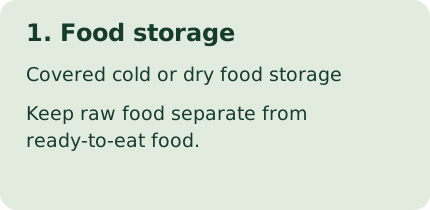
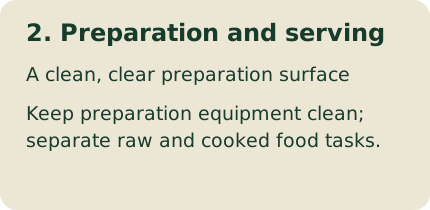
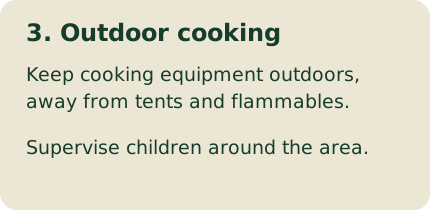
Storage separation and clean preparation are different jobs: plan for both.
2Keeping food clean and chilled
Store raw food separately from ready-to-eat food. The raw mince and the bread rolls need to stay apart, however full the food box gets.
Preparation needs its own arrangement. Where possible, use different equipment for raw and cooked food, such as separate chopping boards and knives. When sharing equipment, prepare vegetables and fruit first and raw meat last, washing utensils with soap between tasks.
Keep open food covered. A nosy wasp, a bold gull or a curious dog will take an uncovered sausage roll as an invitation.
Cross-contamination happens when bacteria transfer from raw food to other food, equipment or surfaces. Keeping food separate and cleaning up between tasks helps limit that transfer. Wash hands with soap and water before preparing food and after handling raw food, and clean cooking equipment, utensils and preparation surfaces. The washing-up bowl earns its keep here.
Keep chilled food below 5°C and check it with a thermometer rather than assuming the cooler is doing its job. Ice inside the box is not a temperature reading. Plan meals around how long your setup can actually keep food chilled, especially on longer stays.
If you cannot reliably maintain that temperature, switch the menu towards dry or shelf-stable food. Chilled meat that has spent a warm afternoon in the boot isn’t something to gamble dinner on.
3Packing without the clutter
Plan the menu first, then pack backwards from it. List what each meal needs, cross off duplicate equipment, and group the rest by function: chilling kit together, cooking kit together, washing-up kit together.
Your core kit will usually include:
- Chilling equipment and a way to check its temperature if you’re carrying perishable food.
- Covered food containers.
- Preparation equipment that lets you keep raw and cooked food separate, or a plan for cleaning shared equipment between tasks.
- Soap, washing supplies and a clean preparation surface.
- Separate containers for fresh water and wastewater, plus bags for rubbish.
Let the menu and the number of people determine quantities. You don’t need to recreate the kitchen cupboards on a folding table.
If you’re taking a cooking appliance, use the fuel specified in the manufacturer’s instructions for that appliance. This isn’t a place to improvise.
Plan to use the most perishable chilled food early, following product storage instructions and use-by dates throughout the trip. Check storage temperatures rather than relying on the order of your meal plan to make food safe. Later meals can lean towards dry or shelf-stable ingredients if keeping food chilled is becoming difficult.
4Water, washing and waste
Use separate containers for fresh water and wastewater. Don’t use the same jerry can for drinking water one day and washing-up water the next.
Collect washing-up wastewater and take it to the campsite’s designated drain. If you cannot find the disposal point, ask the operator where to take it rather than emptying it on the pitch.
Bag rubbish and use the designated facility. If there isn’t one, take it away with you. Nobody wants to be the family who left a bin bag flapping on the pitch next door.
5Cooking safely when the weather turns
Warm weather puts pressure on cold storage. Check the cooler’s temperature, replenish cooling as needed, keep it in the shade where you can, and simplify the menu if you cannot maintain that below-5°C target.
Use fuel-burning cooking equipment outdoors and away from tents. Rain does not make it safe to move a stove or barbecue inside.
Barbecues can produce lethal carbon monoxide in enclosed spaces, including tents and awnings. The danger continues after cooking: a cooling or smouldering barbecue can still give off carbon monoxide. Never bring one inside because it looks as though it has gone out.
The Camping and Caravanning Club advises against using gas, charcoal, liquid-fuel or solid-fuel appliances inside a tent or awning. Mid and West Wales Fire and Rescue Service advises keeping cooking appliances away from tent walls, flammable materials and long grass.
If bad weather leaves you without a safe outdoor cooking arrangement, choose a no-cook meal or use a suitable facility provided by the campsite. Keep the stove out of the tent and porch.
6A repeatable meal routine
Use a short routine at each meal so you’re not working everything out again when everyone’s hungry.
Before preparing food: check chilled storage, wash hands and bring out that meal’s ingredients. Keep raw food separate from ready-to-eat food in storage. Where possible, use separate preparation equipment for raw and cooked food; clean shared equipment between tasks.
While cooking: use the outdoor cooking area and keep food covered when it isn’t being prepared or served.
After eating: clean the cooking equipment, utensils and preparation surface. Collect wastewater for the designated drain, bag rubbish and put the kit back in its place.
7Ready for tomorrow’s breakfast
A family camp kitchen doesn’t need to be elaborate. Give each job some space, build a few repeatable hygiene habits, keep fuel-burning equipment outdoors and away from tents, and pay attention to what your cool box can actually manage.
Then put everything back where tomorrow’s hungry version of you can find it. That person deserves a fighting chance of locating the kettle.
Read next
When the Weather Turns: How to Prepare for the Unexpected in the UK Outdoors
Prepare for changing UK weather with practical advice on planning, clothing, shelter and knowing when to change your plans.
Why tents get condensation — and how to reduce it
A practical UK camping guide to why condensation forms, how to distinguish it from a leak and how to manage moisture without compromising weather protection or safety.
Join the conversation
What has worked for you? Share a useful tip, ask a question or tell us about your experience. Keep it friendly and leave out personal contact details.
Comments are reviewed before appearing. Your display name and comment will be public; your email address will not. How we handle your information.