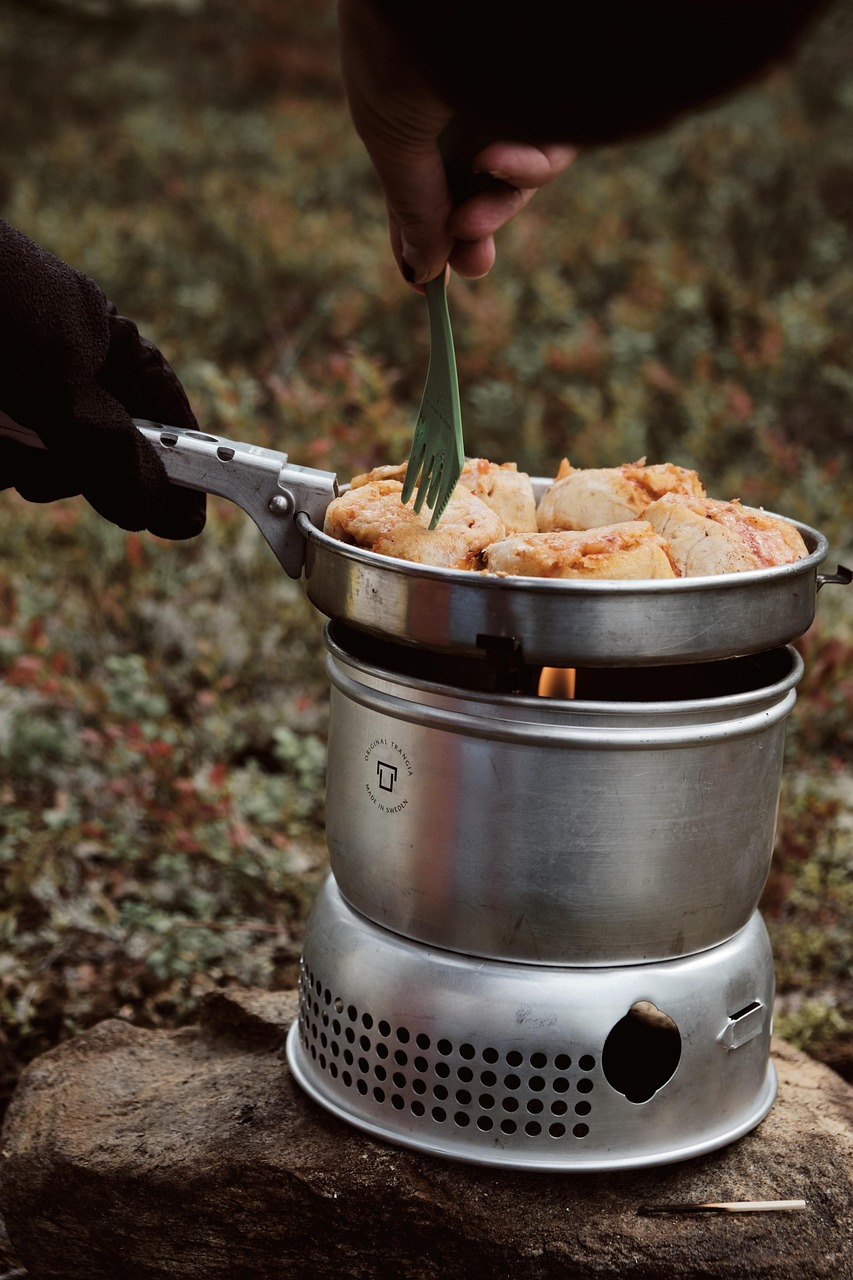
Camping Stove Types Explained: Which Suits Your Kind of Trip?
There’s a particular moment familiar to most campers: standing in a shop aisle, or three tabs deep into an online rabbit hole, staring at a wall of stoves that all promise to be the one true answer to dinner. Screw-top canister stoves, remote-canister ones with a little hose, all-in-one systems that look like they arrived from a spaceship, and the humble solid-fuel or wood-burning options that seem almost defiantly old-fashioned. It’s a lot of gas-related decision fatigue for something whose only job, ultimately, is to make water hot.
The honest answer to “which stove should I buy” is the deeply unsatisfying “it depends.” It depends on how you’re getting to the campsite, how many mouths you’re feeding, how ambitious your camp cooking actually is versus how ambitious you’d like to pretend it is, and what the weather and terrain are likely to throw at you. This piece won’t crown a winner, because there isn’t one — there’s only a better or worse fit for what you’re actually doing. What follows is a way of thinking through that fit.
In a nutshell
Stove choice mostly comes down to matching fuel type and burner configuration to your trip: canister-top stoves are compact and simple for one or two people travelling light; remote-canister stoves offer better stability and wider pot support for slightly bigger meals; integrated systems prioritise fast boiling over cooking flexibility; and liquid-fuel, alcohol, solid-fuel and wood-burning stoves each bring their own handling quirks and trade-offs. Group and full-size car-camping stoves exist but need model-specific research that goes beyond general advice. Whatever you choose, carbon monoxide, fire and ventilation risks are serious and non-negotiable, and you should always follow the specific manufacturer instructions and current campsite rules for your appliance and fuel.
1Fuel Families and Burner Configurations: The Basic Landscape
Before getting into which stove suits which trip, it helps to separate two things that often get talked about as if they’re the same: the fuel a stove burns, and the way the stove is built around that fuel.
Gas canister stoves are probably what most people picture first. Within that family there’s a meaningful split between canister-top stoves, where the burner screws directly onto the top of an upright gas canister, and remote-canister stoves, where the burner sits on its own legs and is connected to the canister by a hose. That hose isn’t just a styling choice — it changes the stove’s centre of gravity, which in turn changes how it behaves on uneven pitches.
Integrated cooking systems are a further variation again: a burner paired with a dedicated pot, usually with a heat-exchanger base, designed and sold as a single boiling unit rather than a general-purpose cooker.
Outside the gas-canister world, liquid-fuel and multifuel stoves burn fuels such as naphtha, unleaded petrol or kerosene, sometimes via an upgrade kit attached to what would otherwise be a standard canister stove. Alcohol-burning stoves, familiar from marine and vehicle installations, use denatured alcohol in a sealed canister system. Solid-fuel tablet stoves and wood-burning stoves form their own separate category again, with very different handling, availability and restriction considerations from anything gas-based.
Each of these fuel-and-configuration combinations has real, practical consequences for how you cook, how much you carry, and how much fuss is involved in getting dinner on. The rest of this guide works through those consequences by the kind of trip you’re actually taking.
2The Solo or Lightweight Traveller: Canister-Top Stoves
If your camping involves a rucksack, your own two feet, and a strong desire not to carry anything you don’t need, canister-top stoves are the obvious starting point. The burner screws straight onto the gas canister, so there’s no hose, no separate fuel line, and very little to go wrong in the dark at the end of a long day.
The appeal here is almost entirely about simplicity and packed size. There’s comparatively little to assemble, little to maintain, and not much extra bulk beyond the canister itself. That makes this configuration a natural fit for cooking for one or two people, particularly where the ambition is boiling water for a rehydrated meal or a brew rather than preparing something more involved in a wide pan.
The trade-off is stability and pan flexibility. Because the whole stove balances on top of the canister, the overall setup sits higher off the ground with its weight concentrated at the top — precisely the kind of arrangement that rewards a flat, sheltered pitch and punishes a wobbly picnic table. Larger or heavier pans, or anything you’d want to fill right to the brim, are working against the design rather than with it.
3Wanting a Bit More Stability or a Bigger Pan: Remote-Canister Stoves
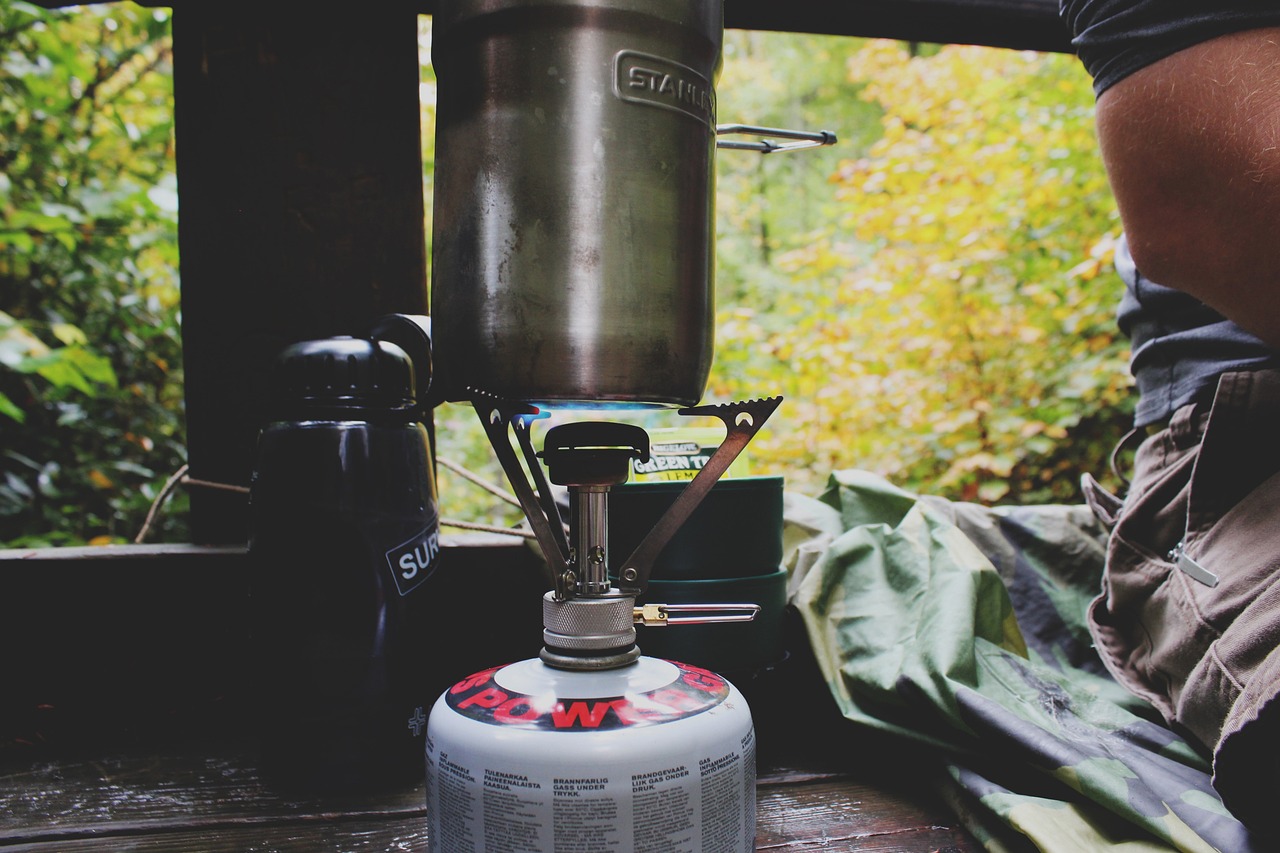
Remote-canister stoves solve the top-heavy problem by moving the canister off to one side and connecting it to the burner with a hose. The burner then sits low, on its own folding legs, which brings the centre of gravity down and generally improves stability on uneven ground compared with a canister-top design.
That lower, wider stance also tends to come with wider folding pot supports, which matters if you’re hoping to cook for more than one or two people, or if you simply want the reassurance of a broader base under a fuller pan. Some remote-canister stoves include a preheating coil intended to improve performance in colder conditions, and some can be upgraded with an accessory kit to run on liquid fuel instead of gas — though such upgrades and their conditions of use are specific to the individual product and its instructions, not a general feature of the category.
The cost of that added stability and flexibility is generally a bit more weight and packed volume than a canister-top stove, plus a hose and connector to look after. For walkers counting every gram, that may matter. For cycle tourers or anyone with slightly more luggage capacity, it’s often a reasonable exchange.
4Wanting Speed Over Flexibility: Integrated Cooking Systems
Integrated systems pair a burner with a matched pot, usually featuring a heat-exchanger base designed to capture more of the flame’s heat rather than losing it to the surrounding air. The entire point of this configuration is speed and fuel efficiency for a fairly narrow job: getting water hot, quickly, so you can rehydrate a meal or make a hot drink.
What you gain in boiling efficiency, you tend to lose in general-purpose cooking flexibility. These systems are usually not designed around simmering a sauce, frying anything, or swapping in a different, wider pan for a bigger group. If your camp cooking rarely goes beyond “add hot water,” that narrowness is entirely beside the point. If you like the idea of frying breakfast or reducing a proper stew, it’s worth knowing that’s not really what this configuration is for.
5Feeding a Family or Small Group from a Car: Bigger Stoves, Bigger Questions
Car camping changes the maths substantially, because weight and packed size stop being the limiting factor and cooking for several people at once becomes the priority. This is where two-burner and multi-burner stoves, wider grill-style cookers and dedicated basecamp stoves come into their own, offering wider pot supports, multiple simultaneous burners, and generally far more cooking capacity than anything designed to be carried on a back.
This is also, honestly, an area where general advice reaches its limits fairly quickly. Full-size car-camping and multi-burner group stoves vary enormously between models in their burner arrangement, fuel connection, output and cookware compatibility, and matching a specific stove to a specific group size and menu is best done by checking that model’s own manufacturer documentation directly, rather than relying on generic type-level guidance. What can be said in general is that if you’re cooking for a family or a group and don’t have to carry the stove anywhere, a bigger footprint and multiple burners are usually worth the extra bulk; beyond that, the details are genuinely model-specific.
6Liquid-Fuel and Multifuel Stoves: Flexibility With a Learning Curve
Liquid-fuel and multifuel stoves burn fuels such as naphtha, unleaded petrol or kerosene, and their main selling point is fuel flexibility, particularly useful when travelling somewhere gas canisters of the right fitting might be hard to find, or for genuinely cold conditions where liquid fuel can behave more predictably than a gas canister running low on pressure. Some manufacturers offer multifuel upgrade kits that convert an existing canister stove to run on liquid fuel as an accessory.
The trade-off is a steeper learning curve. Liquid-fuel stoves typically require priming and occasional maintenance that canister stoves simply don’t ask for, and handling liquid fuel safely — filling, priming, storing — is a different discipline from clipping on a gas canister. This is a configuration that tends to suit people who value fuel flexibility highly enough to accept the extra fuss, such as those travelling internationally or heading somewhere fuel supply is uncertain, rather than a default choice for straightforward UK weekend camping.
7Alcohol Stoves: A Specific, Contained Niche
Alcohol-burning stoves using denatured alcohol are most associated with fitted installations in boats and vehicles, where the fuel is held in a sealed canister system built into the stove itself rather than an interchangeable pressurised canister. Manufacturer guidance for these stoves is explicit that only denatured alcohol should be used — not other fuels such as petrol, diesel, methanol, propane or charcoal lighter fluid — and that the canister should only ever be filled to its stated maximum capacity, since alcohol expands as it heats and an overfilled canister can lead to uncontrollable burning inside the stove.
This is a narrower niche than the gas-canister or liquid-fuel categories: a good fit if you’re specifically fitting out a boat or camper conversion, and a much less obvious choice for general tent camping.
8Solid Fuel and Wood-Burning Stoves: Availability Isn’t Guaranteed
Solid fuel tablet stoves and wood-burning stoves form their own distinct category, and they come with a consideration the gas and liquid-fuel options don’t: availability of fuel is not something you can simply assume. Wood-burning stoves depend on finding suitable dry fuel on site, and that depends on location, season, weather, ground conditions and, importantly, whether gathering wood is actually permitted where you’re staying — a genuine constraint rather than a minor inconvenience, since permission, weather, ecological pressure and fire restrictions can all rule it out on a given trip or site.
It’s also worth knowing that some organised camping events explicitly prohibit solid fuel tablets, gel fuels, methylated spirits and other liquid fuels, along with barbecues, charcoal and wood of any kind, restricting cooking to gas only — often for wildfire-risk reasons in hot, dry conditions. Where that applies, it applies specifically to that event or site, so checking the current rules for wherever you’re headed is a sensible step before you pack a solid-fuel or wood-burning stove as your only option.
9Matching Stove to Trip: A Way of Thinking It Through, Not a League Table
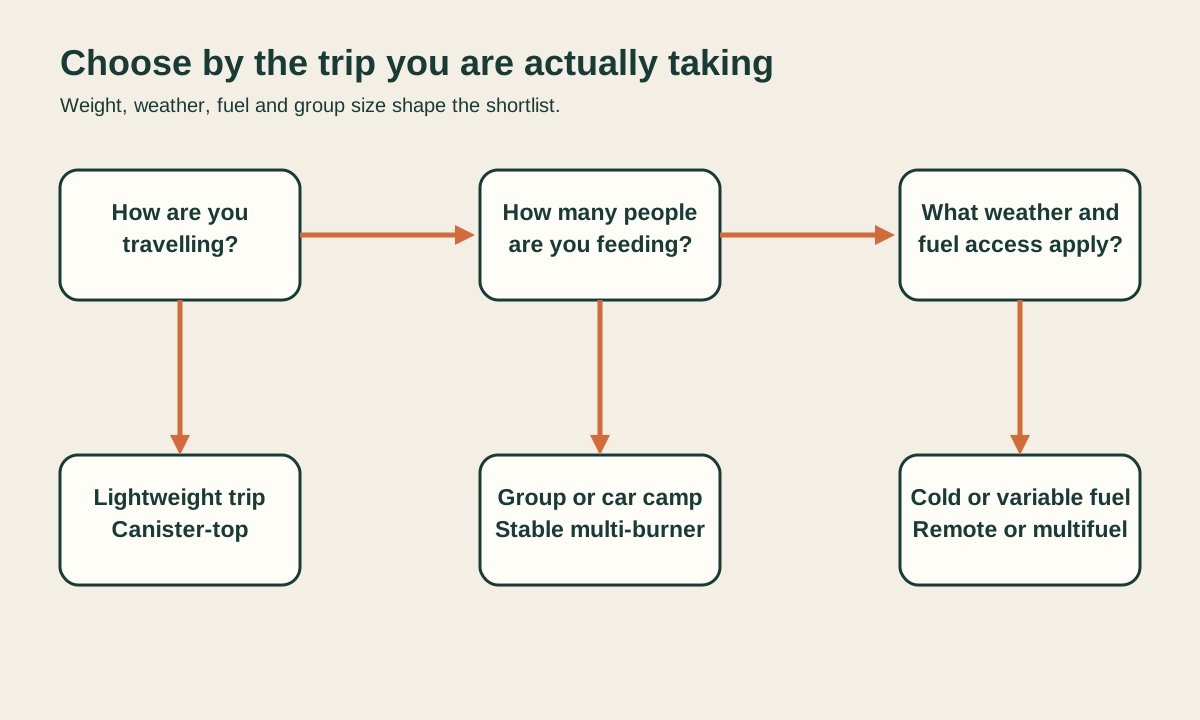
Rather than ranking stoves against each other, it’s more useful to run through a short set of questions about your own trip:
- How are you getting there, and how much can you carry? Walking in favours canister-top stoves for their low weight and packed size; car access removes that constraint and opens up bigger multi-burner options.
- How many people are you cooking for, and how big is the pan? One or two people boiling water suits a compact canister-top stove; a family or group meal in a wide pan benefits from the stability of a remote-canister stove or a dedicated multi-burner unit.
- What are you actually cooking? If it’s mostly rehydrated meals and hot drinks, an integrated system’s speed is a genuine advantage; if it’s frying, simmering or anything requiring pan-swapping, a general-purpose burner suits better.
- Where are you going, and what fuel will be available there? Gas canisters of a specific fitting aren’t universally available everywhere, which is part of why liquid-fuel and multifuel stoves exist; wood and solid fuel depend on local permission and conditions, not just preference.
- How much maintenance and fuss are you willing to take on? Canister stoves ask very little of you beyond attaching a canister; liquid-fuel stoves ask for priming and upkeep in exchange for their flexibility.
None of these questions has a universally correct answer, which is really the point. A stove that’s an excellent choice for a solo wild camp can be a poor choice for a family weekend at a drive-up pitch, and vice versa.
10Safety: The Part That Isn’t Optional
However pleasant the rest of this is to think through, the safety side of stove use is not a matter of preference, and it deserves to be taken entirely seriously.
Carbon monoxide is a colourless, tasteless, odourless gas produced whenever fuel burns without enough oxygen present, and it is genuinely dangerous. It reduces the amount of oxygen your blood can carry around your body, and brief exposure to smaller amounts can cause headache, dizziness, nausea and confusion, while higher exposure can cause loss of consciousness and death. Officially documented UK incidents and deaths from carbon monoxide have occurred specifically in caravans, tents and boat cabins, often linked to faulty gas cookers and appliances, or to petrol-powered generators, and carbon monoxide can build up to lethal levels very quickly in enclosed spaces — including awnings, not just fully sealed tents.
The practical guidance that follows from this is consistent across UK fire and health authorities: never take a gas stove, heater or lit or smouldering barbecue into a tent, caravan or cabin, even if you believe you’ve finished cooking; never use a barbecue indoors to keep warm; never leave a lit stove or barbecue unattended or burning while you sleep; and always cook outside, away from tent walls and flammable material. Fires in tents can spread in under a minute, and because many tents have only one entrance, that speed matters enormously — campsite guidance commonly recommends keeping tents and caravans at least six metres apart from each other and away from parked cars, and knowing how you’d escape, including cutting your way out if necessary.
An audible carbon monoxide alarm meeting the relevant British or European Standard is worth having in a caravan, boat or fixed shelter, though it’s a backup rather than a substitute for using appliances correctly, checking hoses and connections are undamaged, and following the manufacturer’s instructions for your specific stove or heater. If you ever suspect carbon monoxide exposure — headaches, dizziness, nausea, breathlessness or confusion that don’t fit an obvious other cause — get into fresh air immediately, and seek medical advice; in an emergency, call 999.
Beyond carbon monoxide, ordinary fire risk deserves the same seriousness: keep cooking appliances away from tent walls and long grass, never use petrol or paraffin to light a solid-fuel stove, take care with gas cylinder connections and check for leaks using soapy water rather than a flame, and know your specific campsite’s fire safety arrangements before you need them.
Because exact requirements — approved fuels, canister types, ventilation needs, windshield use, cookware compatibility and safe operating clearances — vary by specific stove model, the reliable source for those details is always the current manufacturer instructions for your exact appliance, alongside whatever rules apply at your specific campsite or event.
11Bringing It Together
There’s no single best camping stove, only a best fit for the trip you’re actually planning. A lightweight canister-top stove that’s perfect for a solo two-night walk would be mildly absurd — and quietly disappointing — at a family barbecue-adjacent car-camping weekend, and a multi-burner basecamp stove would be a fairly miserable thing to carry up a hill. Work out how you’re travelling, how many people you’re feeding, what you actually intend to cook, and what fuel will realistically be available to you, and the right category tends to become obvious fairly quickly. What doesn’t change, whichever category you land in, is that the safety basics around carbon monoxide, ventilation and fire aren’t negotiable, and they’re worth taking as seriously as the voice in your head that keeps insisting you definitely need the stove with the piezo igniter.
Read next
How to Choose a Sleeping Bag for UK Camping
Choose a sleeping bag suited to UK conditions, with clear advice on temperature ratings, insulation, fit and getting a comfortable night outdoors.
How to choose a sleeping mat for UK camping
A practical guide to warmth, comfort, construction, fit and reliability, from inexpensive foam mats to compact insulated air mats.
Join the conversation
What has worked for you? Share a useful tip, ask a question or tell us about your experience. Keep it friendly and leave out personal contact details.
Comments are reviewed before appearing. Your display name and comment will be public; your email address will not. How we handle your information.